

Felcorp Support

Client and Engagement-Level Data Separation
How Felcorp separates client engagements to prevent cross-contamination, pooled access and unauthorised visibility between staff.
Last updated
March 8, 2026
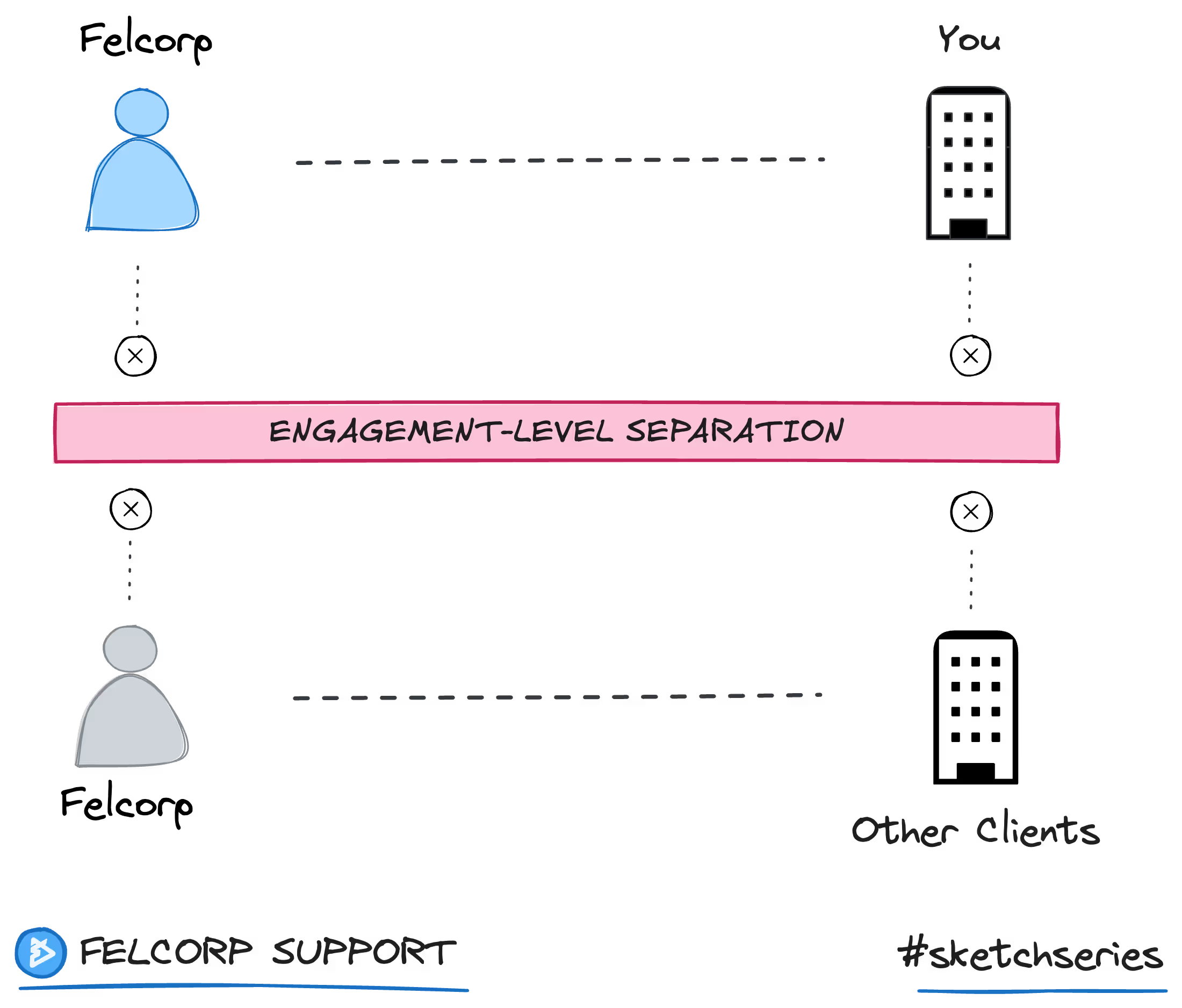
Each client engagement at Felcorp operates as a separate, contained unit. Staff assigned to one engagement cannot see, access or interact with data belonging to another. This separation is enforced at the system, process and management level to prevent cross-contamination between client environments.
The model ensures that even within the same office, the same team or the same division, one client's information remains invisible to staff who have no direct responsibility for that engagement.
Dedicated Staff Assignments
Staff are assigned to specific client engagements and access is provisioned exclusively for that engagement. There is no pooled workforce model where staff float between clients on an ad-hoc basis.
Each staff member knows which engagement they are working on, what data they are authorised to access and what systems they are permitted to use. Where a client requires multiple staff members, each individual is provisioned separately with their own credentials and access scope.
This dedicated assignment model means staff have no reason or ability to encounter another client's data during normal operations.
System-Level Separation
Access to client systems and data is configured per engagement. Credentials, file storage access and platform permissions are scoped to the individual client and cannot be used to access resources belonging to another engagement.
Within Felcorp's internal platforms, client data is organised so that each engagement's information is visible only to authorised personnel for that engagement. Management retains oversight across engagements for governance purposes, but frontline staff see only what is relevant to their assigned work.
For detail on how these access controls are structured, refer to Identity and Access Management.
Preventing Cross-Contamination
Cross-contamination occurs when information from one engagement is inadvertently or deliberately exposed to staff working on another. Felcorp's separation model is designed to eliminate the conditions that make this possible.
Staff do not share workstations configured for different engagements. Communication channels are scoped to engagement-specific groups. File storage is partitioned so that browsing or searching within Felcorp's platforms cannot surface data from unrelated engagements.
The onsite working environment described under Secure Working Environment adds a physical dimension to this separation, with management presence providing ongoing oversight of how staff interact with data on the floor.
Staff Anonymity Between Engagements
Clients are not exposed to the details of other client relationships. Staff working on one engagement are not aware of who else Felcorp services or what work is being performed for other clients. This anonymity operates in both directions and protects the confidentiality of every client relationship.
Where a temporary staff substitution is required, the substitute is drawn from within the same division and is subject to the same separation controls. The client must provide written approval before the substitution proceeds, and access is provisioned only for that specific engagement.
Onboarding and Offboarding
Engagement-level separation is enforced from the first day of an assignment. During onboarding, staff receive access only to the systems, data and communication channels relevant to their engagement. No broad or exploratory access is granted.
When a staff member is reassigned or an engagement concludes, all access is revoked promptly. Credentials are removed, platform permissions are disabled and any engagement-specific data held within Felcorp's systems follows the disposal process described under Operational Processes and Policies.
How This Fits the Security Framework
Client and engagement-level separation sits within the Security By Engagement layer of Felcorp's three-layer security framework. This is the most granular layer of protection, ensuring that every individual client relationship is governed by its own access controls, confidentiality obligations and data boundaries.
The legal enforcement behind these obligations is described under Non-Disclosure Agreements.
On this page